
Exports in June rose by 23.52 per cent to $40.13 billion while the trade deficit ballooned to a record level of $26.18 billion mainly due to jump in gold and crude oil imports, the government data said on Thursday. The country's export growth in May was 20.55 per cent. Imports expanded by 57.55 per cent to $66.31 billion in June compared to the year-ago month, the data showed.

The wholesale price-based inflation eased for the eighth consecutive month to 4.73 per cent in January on easing prices of manufactured items, fuel and power. The wholesale price-index (WPI) based inflation rate was 4.95 per cent in December 2022 and 13.68 per cent in January 2022. Inflation in food articles, however, rose to 2.38 per cent in January, from (-) 1.25 per cent in December, 2022.

One needs to charge the device every four days, which can provide over 65,000 blood readings and counts.

The wholesale price-based inflation eased to a 29-month low of 1.34 per cent in March on easing prices of manufactured products and fuel items, even though food articles turned expensive.

The output of eight core sectors grew by 16.8 per cent in May, mainly due to a low base effect and uptick in production of natural gas, refinery products, steel, cement and electricity, official data released on Wednesday showed. The eight infrastructure sectors of coal, crude oil, natural gas, refinery products, fertilisers, steel, cement and electricity had contracted by 21.4 per cent in May 2020 due to the lockdown restrictions imposed to control the spread of the COVID-19 infections. In March this year, these key sectors had recorded a growth of 11.4 per cent, and 60.9 per cent in April.

The mutual fund (MF) industry has seen a fair number of new entrants in the last 10 years but none of them have proved to be much of a challenge for the larger players. The list of top 20 fund houses, which manage over 90 per cent of the industry's total assets, continues to be dominated by players who have been in the business for more than a decade. Bajaj Finserv MF may change that, say experts.
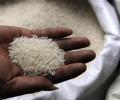
The Russia-Ukraine war is likely to improve the export profile of landlocked Chhattisgarh, which has already nearly tripled during the past three years. Chhattisgarh's exports reached Rs 25,241.13 crore in the financial year 2021-22 against Rs 9,067.92 crore worth of products shipped in 2019-20, according to the state government's data. While exports of iron and steel surged seven and a half times, rice shipping increased 4.68 times.

With 16 start-ups gaining unicorn status in 2021, India's tally has touched the 50 mark. The newest entrant to this list include Pune-based MindTickle, which is close to finalising a $100-million funding round from Softbank's Vision Fund 2, taking the company's valuation to $1.1 billion.

The proposed amendments to the Consumer Protection (E-Commerce) Rules, 2020, that are envisioned to protect consumer interests, may further compound the impact of multiplicity of regulations on the e-commerce sector, the Indo-American Chamber of Commerce (IACC) had told the ministry of consumer affairs. IACC, the apex bilateral chamber for Indo-US business, had told the government that the proposed amendments would increase compliance liabilities that risk severely impairing the growth of the sector.

Things are looking up for engineering firms and Siemens is likely to be one of the leading beneficiaries. Apart from the generic revival in activity, which is expected to continue through the 2023-24 financial year (FY24), the Budget has a strong infrastructure thrust, which works in Siemens' favour. The company reported a standalone Ebitda (earnings before interest, tax, depreciation and amortisation) of Rs 550 crore (up 66 per cent year-on-year or YoY) in Q1FY23 (Siemens follows the October-September accounting year).

Even as the Group of Seven (G7) price cap on Russian crude oil enters into force as of December 5, India has been assured it will continue to receive the existing deep discounts on Russian oil, for the time being, informed officials. "We have been assured by our Russian partners of uninterrupted crude supplies at the existing rates for the time being. "There were a lot of reports of changes in (India's) buying patterns after the global price cap took hold.

Apart from cotton, copper, petroleum and industrial machinery, India does not export much to China. This means that India buys six times the merchandise it sells to China, points out Abhishek Waghmare.

RBI Governor Shaktikanta Das on Friday said the entry of big tech firms into the financial sector poses systemic concerns like overleveraging at the borrowers' ends.

At least 14 of the top 20 venture capital (VC) and private equity (PE) funds in India reduced new deals with start-ups by a fifth in 2022. The number fell from 572 in 2021 to 456 this year, according to data from Venture Intelligence. Sequoia Capital, a leader in investments, retained its top slot but its number of deals fell from 110 in 2021 to 70 this year.

The output of eight core sectors grew by 11.6 per cent in August, mainly due to an uptick in the production of cement, coal, and natural gas, official data showed on Thursday. The eight infrastructure sectors of coal, crude oil, natural gas, refinery products, fertilisers, steel, cement and electricity had contracted by 6.9 per cent in August 2020 due to the nationwide lockdown imposed to control the spread of COVID-19. The eight core industries comprise 40.27 per cent of the weight of items included in the Index of Industrial Production (IIP).

The wholesale price-based inflation rose to 2.03 per cent in January, 2021, even as food prices cooled. The WPI inflation was 1.22 per cent in December, 2020 and 3.52 per cent in January last year. While food articles saw softening in inflation in January, manufactured items witnessed hardening of prices, as per data released by the Commerce and Industry ministry.
"In principle, the ask in return is that India should not support the G7 (Group of Seven) proposal. "A decision on this issue will be taken later following talks with all the partners," an official with the Ministry of External Affairs (MEA) said.These "substantial discounts" will be steeper than those offered by Iraq in the past two months, officials said.

At the World Bank Banga will be replacing David Malpass, a former Trump treasury official, reports axios.com. Malpass had already announced that he will resign by July, months ahead of his term expired. "Ajay is uniquely equipped to lead the World Bank at this critical moment in history," President Biden said in a statement. Banga, 63, currently serves as vice chairman at General Atlantic.

The country's exports rose by 48.34 per cent to $32.5 billion on account of healthy growth in shipments of petroleum products, gems and jewellery, and chemicals, leather and marine goods, according to the data released by the Commerce Ministry on Thursday. Imports in June too rose by 98.31 per cent to $41.87 billion, leaving a trade deficit of $9.37 billion as against a trade surplus of $0.79 billion in the same month last year. During April-June 2021, the exports increased by 85.88 per cent to $95.39 billion.

Foreign direct investment into India increased by 60 per cent to $4.44 billion in April as against $2.77 billion in the same month last year, government data showed on Wednesday. Total FDI, including equity, re-invested earnings and capital, rose 38 per cent to $6.24 billion in April this year, as against $4.53 billion in April 2020, as per the data. "During April, 2021 FDI equity inflows amounting to $4.44 billion were reported in the country which is an increase of 60 per cent over the FDI equity inflow of April, 2020 ($2.77 billion)," the commerce and industry ministry said in a statement.

India's exports contracted 12.2 per cent to $34.48 billion in December 2022, mainly due to global headwinds, and the trade deficit widened to $23.76 billion during the same period, according to official data released on Monday. Imports in December 2022 also declined 3.5 per cent to $58.24 billion as against $60.33 billion in the year-ago period. In December 2021, exports stood at $39.27 billion and the trade deficit was at $21.06 billion.

The wholesale price-based inflation bucked the 4-month rising trend in December 2021, and eased to 13.56 per cent, mainly on account of softening in fuel, power and manufacturing items even though food prices hardened. WPI inflation has remained in double digits for the ninth consecutive month beginning April. Inflation in November was 14.23 per cent, while in December 2020 it was 1.95 per cent.

Adani Enterprises' proposed Rs 20,000 crore (Rs 200 billion) fundraising via fresh issue of equity shares through a public offer would be the fourth biggest by Indian companies, excluding banks and non-banking financial companies.

The country's exports jumped by 58.23 per cent to $34 billion in March as key sectors such as engineering, gems and jewellery and pharmaceuticals recorded healthy growth rate during the month, according to the Commerce Ministry's provisional data. Exports during April-March 2020-21, however, dipped by 7.4 per cent to $290.18 billion compared to $313.36 billion in 2019-20, the data showed. Imports during 2020-21 contracted by 18 per cent to $388.92 billion compared to $474.71 billion during 2019-20. In March 2020, the exports stood at $21.49 billion, which was a decline of about 34 per cent over March 2019 due to global slowdown induced by the Covid-19 crisis.

The output of eight core sectors declined by 4.6 per cent in February, the steepest contraction in the last six months which experts said could drag the overall industrial production in the month into the negative territory. All the key segments, including coal, crude oil, natural gas, and refinery products, witnessed a decline in production, according to the official data released on Wednesday. The growth rate of the eight infrastructure sectors -- coal, crude oil, natural gas, refinery products, fertilisers, steel, cement and electricity -- stood at 6.4 per cent in February 2020. Last time in August 2020, the sectors had recorded a negative growth of 6.9 per cent.

The production of eight infrastructure sectors rose by 7.5 per cent in October on healthy performance by the segments of coal, natural gas, refinery products and cement, official data released on Tuesday showed. The output of eight core sectors of coal, crude oil, natural gas, refinery products, fertilisers, steel, cement and electricity had contracted by 0.5 per cent in October 2020, according to the data released by the commerce and industry ministry. Core sectors' growth stood at 4.5 per cent in September this year.

Contracting for the eighth consecutive month, the output of eight core infrastructure sectors dropped by 2.5 per cent in October, mainly due to decline in production of crude oil, natural gas, refinery products and steel. The production of eight core sectors had contracted 5.5 per cent in October 2019, data released by the Commerce and Industry Ministry showed on Friday.

'If they are taking marquee locations and, say, are paying 50 per cent higher rent, those locations will see a spurt in rates as well.'

The proposed e-commerce rule book issued recently by the ministry of consumer affairs does not mention foreign companies or foreign direct investment (FDI) at any place, unlike most other government guidelines for the sector so far. That is a heartening development since the latest proposals could be fine-tuned as e-commerce policy.

India's climate change goals are turning combustible. On the one hand, a protracted dispute between the government and manufacturers over subsidies threatens to slow the pace of electric vehicle (EV) sales. On the other hand, repeated assertions by different arms of the government over banning sales of new fossil fuel-fired vehicles have queered the pitch for energy investments. Before we address the issue of the recommended diesel vehicle ban in the recent report on energy transition, issued months before the next round of global climate talks begin in Dubai in November, let's look at what's at stake.

Agriculture, social services, education, defence and so on will be brought into the digital fold and every gram panchayat will be connected to the internet.

The ministry of home affairs has recommended a ban on 54 Chinese mobile applications that pose a threat to the country's security, officials sources said on Monday.

Eighteen months after the government started banning Chinese mobile apps, two distinct changes have occurred in the country's mobile app sweepstakes. The move has given a thrust to domestic app publishers, especially in certain segments and it has dramatically reduced the market share of Chinese apps. What started as an interim government ban on 59 Chinese apps, including the highly popular TikTok and WeChat in March 2020 ended as a permanent ban on many of them in January this year. According to a China Internet Report 2021 (by South China Morning Post), the market share of Chinese apps in India has dropped substantially from 44 per cent in 2018 to only 29 per cent in 2020. In 2017 it was 41 per cent.

Nadella's visit comes at a time when the Indian government is taking a strong position on issues like data localisation and tightening the rules for e-commerce companies as well as social media platforms.

India has banned wheat exports with immediate effect as part of measures to control rising domestic prices, according to official notification. However, the export shipments for which irrevocable letters of credit (LoC) have been issued on or before the date of this notification will be allowed, the Directorate General of Foreign Trade (DGFT) said in a notification dated May 13. "The export policy of wheat ... is prohibited with immediate effect...," the DGFT said. It also clarified that wheat exports will be allowed on the basis of permission granted by the Government of India to other countries to meet their food security needs and based on the request of their governments.

The Modi government finds itself in a contradiction of its own making. It has encouraged pro-Russian, Westophobic public sentiment while setting strategic policy that's exactly the opposite, points out Shekhar Gupta.

India's merchandise exports jumped 27.16 per cent to $30.04 billion in November on the back of good performance by sectors like petroleum products, engineering goods and electronic items, official data showed on Tuesday. The exports stood at $23.62 billion in November 2020. Imports in November were at $52.94 billion, showing an increase of 56.58 per cent over inbound shipments of $33.81 billion in the year-ago month.

Engineering giant Larsen & Toubro (L&T) is looking to divest its exposure to road and power concessions and incubate digital and e-commerce businesses as part of its new five-year plan ending 2025-26 (FY26). The base year for the plan is 2020-21 (FY21). The blueprint, called Lakshya 2026, is intended to help the company exit sub-scale businesses, concentrate on high-technology (tech) manufacturing, construction and green energy projects, and increase its share from information technology (IT) and digital services. The lending operations of the financial services business, meanwhile, will be reorganised, with focus on retail lending.

The output of eight core infrastructure sectors contracted for the third month in a row by 1.3 per cent in December 2020, dragged down by poor show by crude oil, natural gas, refinery products, fertiliser, steel and cement sectors. The core sectors had expanded by 3.1 per cent in December 2019, according to the provisional data released by the Commerce and Industry Ministry on Friday. Barring coal and electricity, all sectors recorded negative growth in December 2020. During April-December 2020-21, the sectors' output declined by 10.1 per cent against a growth rate of 0.6 per cent in the same period of the previous year.

'BJP and Modi are confident they will win the 2024 election.'
